Advanced Ball Handling and Court Control Techniques
Master the fundamental skills that separate elite basketball players from average competitors. Develop superior dribbling capabilities and court awareness through systematic training approaches designed to enhance player performance in competitive environments.
Foundation of Ball Control Fundamentals
Effective ball handling begins with understanding the mechanics of dribbling and touch sensitivity. Players must develop consistent hand positioning, finger placement, and wrist movement patterns that enable precise ball contact across varying court conditions. The foundation of superior ball control involves repetitive practice focused on muscle memory development, allowing handlers to execute dribbling maneuvers without conscious thought during high-pressure game situations.
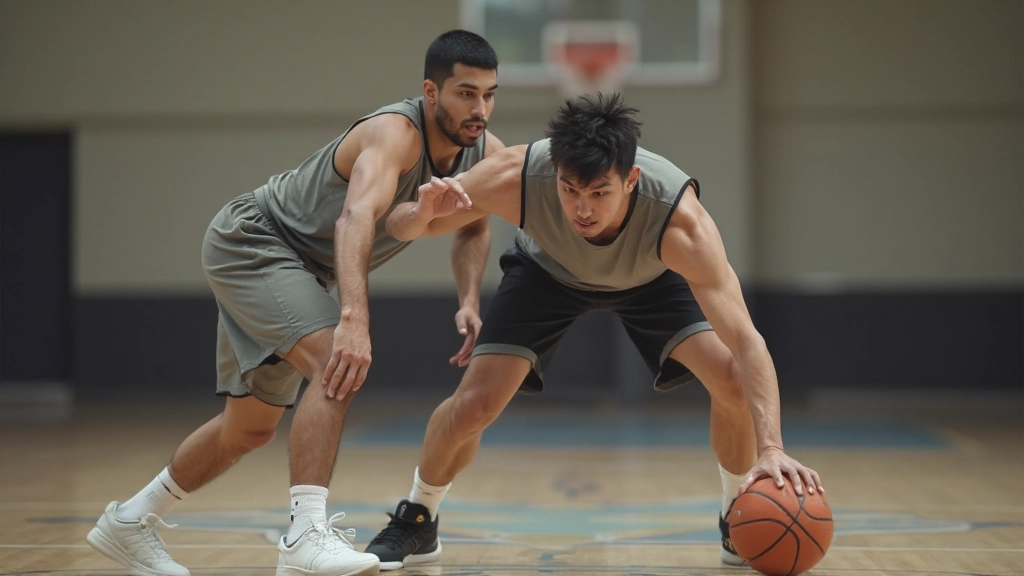
Proper stance and body positioning form the cornerstone of reliable ball handling. Players should maintain a slightly bent knee position with their center of gravity lowered, enabling rapid directional changes and defensive evasion. Hand-eye coordination develops through deliberate practice sessions where players execute dribbling patterns while maintaining visual awareness of the court environment. This coordination development represents an essential component of player development programs across all competitive levels.
Key Dribbling Components
- Finger pad contact: Utilize the pads of fingers rather than palm for precise ball control
- Wrist flexibility: Develop range of motion enabling varied dribble heights and angles
- Rhythm consistency: Maintain regular bounce patterns even during directional transitions
- Court vision: Observe defensive positioning while maintaining ball security
- Pressure response: Execute technique under defensive pressure and fatigue conditions
Progressive Dribbling Pattern Development
Advanced ball handlers employ systematic progression through increasingly complex dribbling patterns that develop versatile court control abilities. The crossover dribble represents a fundamental transition technique where players shift the ball between hands while changing direction. This maneuver requires coordinated movement timing, where the ball passes in front of the body during the transition phase. Mastering this pattern enables players to execute effective offensive moves while maintaining ball security against defensive pressure.
Between-the-legs dribbling patterns represent an advanced skill category requiring exceptional spatial awareness and hand-eye coordination. This technique involves bouncing the ball through the space between a player's legs while executing forward movement or directional changes. The execution demands precise timing and ball trajectory control, as timing errors result in turnovers. Progressive training approaches introduce this skill through stationary practice before advancing to movement-based execution.
Progressive Training Approach
Coaches recommend establishing foundational dribbling proficiency before introducing advanced patterns. Structured training progressions ensure players develop necessary coordination and spatial awareness through methodical skill building.
Common Advanced Patterns
- Crossover Dribble: Shift ball between hands while changing direction laterally
- Between-the-Legs: Execute ball transfer through leg space during forward movement
- Behind-the-Back: Maintain ball control while moving laterally with ball transfer behind body
- Spin Dribble: Rotate body while maintaining ball contact with single hand during transition
- Combo Moves: Sequence multiple patterns in continuous movement for offensive advantage
Educational Information
This content provides educational information regarding basketball training methodologies and skill development approaches. The information presented represents general coaching principles and should not be considered as personalized coaching instruction or professional athletic guidance. Individual player development varies based on age, experience level, physical capabilities, and specific training environments.
Players implementing these techniques should consult with qualified coaching professionals who can assess individual needs and provide personalized instruction. Training progression should be adjusted according to player development stage and competitive level. Results from implementing these approaches depend on multiple variables including practice frequency, training quality, individual dedication, and coaching guidance.
Court Control Through Spatial Awareness
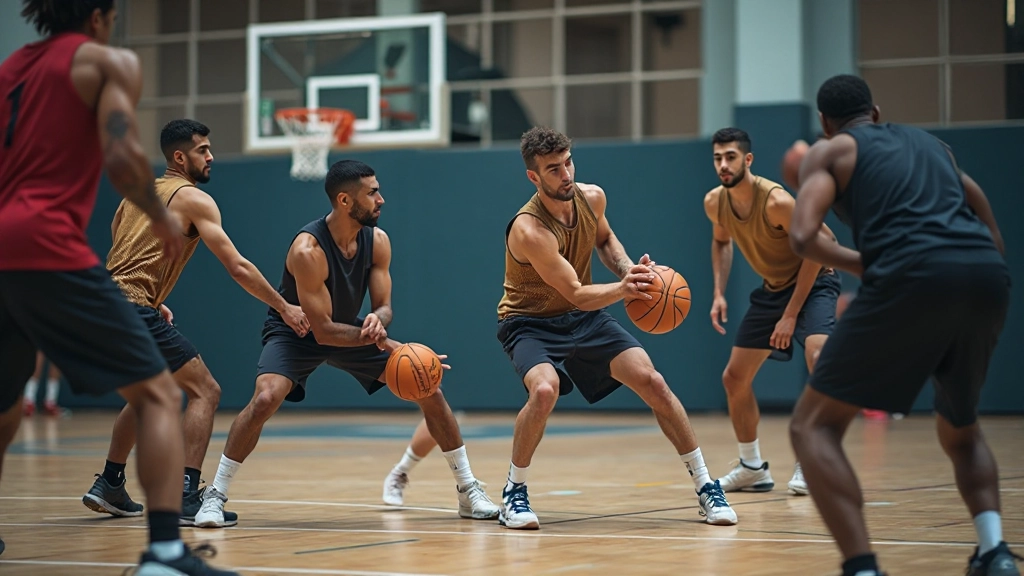
Superior court control extends beyond technical dribbling proficiency to encompass comprehensive spatial awareness and decision-making capability. Players who develop exceptional court control demonstrate consistent ability to assess defensive positioning, identify open teammates, and execute appropriate offensive actions under pressure conditions. This awareness development requires systematic practice emphasizing peripheral vision development and reactive decision-making processes.
Essential Awareness Components
Court awareness encompasses multiple integrated elements that enable players to process information and respond effectively. Defensive positioning assessment involves continuous observation of opposing players' locations and movement patterns. Spacing awareness requires understanding teammate positioning relative to offensive formations. Ball movement timing connects with teammate readiness and basket approach patterns. These integrated awareness components develop through repetitive practice scenarios emphasizing game-realistic situations.
Peripheral Vision
Develop ability to observe court movement while maintaining ball focus. Scanning patterns enable continuous opponent and teammate position assessment.
Decision Processing
Execute rapid evaluation of offensive options and select appropriate actions. Reactive decision-making improves through exposure to varied defensive scenarios.
Spatial Recognition
Maintain awareness of available court space and movement lanes. Understanding spacing relationships enables effective offensive positioning and transitions.
Pressure Management
Maintain composure and execution consistency under defensive pressure. Confidence development enables reliable performance during high-intensity situations.
Structured Training Implementation for Skill Development
Effective implementation of advanced ball handling training requires systematic approach combining technical skill development with game-realistic scenario practice. Training sessions should incorporate progressive difficulty increases, starting with stationary drills and advancing toward movement-based execution under defensive pressure. This progression methodology enables players to build foundational competency before facing game-realistic challenges.
Coaching professionals recommend establishing specific skill development phases within training programs. Initial phases emphasize technical execution quality with reduced complexity. Intermediate phases introduce directional variations and increased movement demands. Advanced phases incorporate defensive pressure and decision-making components. This structured progression supports consistent skill development while maintaining appropriate challenge levels for player engagement and motivation.
Training Session Components
Warm-up Drills (10-15 minutes)
Execute foundational dribbling patterns at controlled pace. Include stationary dribbles, figure-eight patterns, and basic directional changes. Prepare muscles and nervous system for advanced skill execution.
Technical Skill Development (20-25 minutes)
Focus on specific advanced patterns with controlled movement. Practice crossover dribbles, between-the-legs moves, and behind-the-back transitions. Emphasize consistent execution and timing precision.
Game-Realistic Scenarios (20-25 minutes)
Execute skills under defensive pressure with game-speed movement. Include transition drills, offensive sets, and decision-making scenarios. Develop ability to execute techniques consistently during competitive conditions.
Cool-down and Assessment (5-10 minutes)
Complete light movement and flexibility work. Review performance observations and identify focus areas for subsequent sessions. Establish progression planning for continued development.
Summary and Continued Development
Advanced ball handling and court control represent essential skill categories for basketball players seeking to perform at competitive levels. These capabilities develop through systematic training combining technical skill development with game-realistic scenario practice. Consistent execution of progressive drills enables players to build the foundational competencies necessary for reliable performance during competitive situations.
The development of superior ball handling requires sustained commitment to practice and skill refinement. Players who prioritize these skill categories through structured training approaches consistently demonstrate improved offensive capability and court control. Continued engagement with coaching professionals and systematic skill development enables players to advance their capabilities and contribute effectively to team performance objectives.
Key Development Areas
- Establish foundational dribbling proficiency before advancing to complex patterns
- Develop spatial awareness and court vision through systematic practice scenarios
- Practice advanced patterns under game-realistic pressure conditions
- Maintain consistency through progressive training progression
- Seek professional coaching guidance for personalized skill development
Related Basketball Training Articles